Ellora Caves Tour – Complete Travel Guide to India’s UNESCO Heritage Wonder
Ellora Caves, located in Maharashtra, India, stand as one of the world’s greatest examples of rock-cut architecture. Recognized as a UNESCO World Heritage Site, this destination attracts thousands of visitors each year who come to witness the extraordinary fusion of Hindu, Buddhist, and Jain monuments carved directly into the basalt cliffs.
Dating back between the 6th and 10th centuries CE, the Ellora Caves offer an incredible journey into India’s spiritual and artistic traditions. Unlike other heritage sites that belong to a single religion or cultural period, Ellora reflects centuries of diverse spiritual influences coexisting in harmony.
For travelers, an Ellora Caves tour provides not only a cultural experience but also an opportunity to step into a living museum of ancient Indian civilization.
History and Significance of Ellora Caves
The Ellora Caves represent a continuous timeline of faiths and dynasties in India. Built during the Rashtrakuta dynasty, these caves were not constructed with bricks or stones but rather carved into a vertical basalt wall stretching nearly two kilometers.
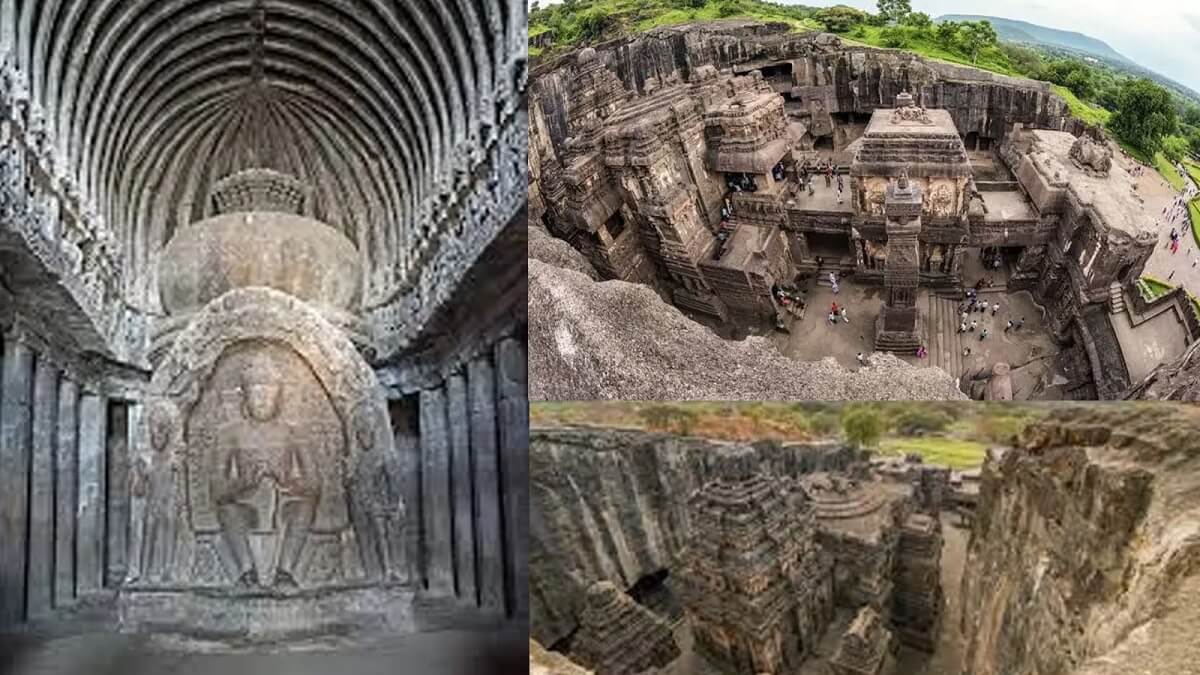
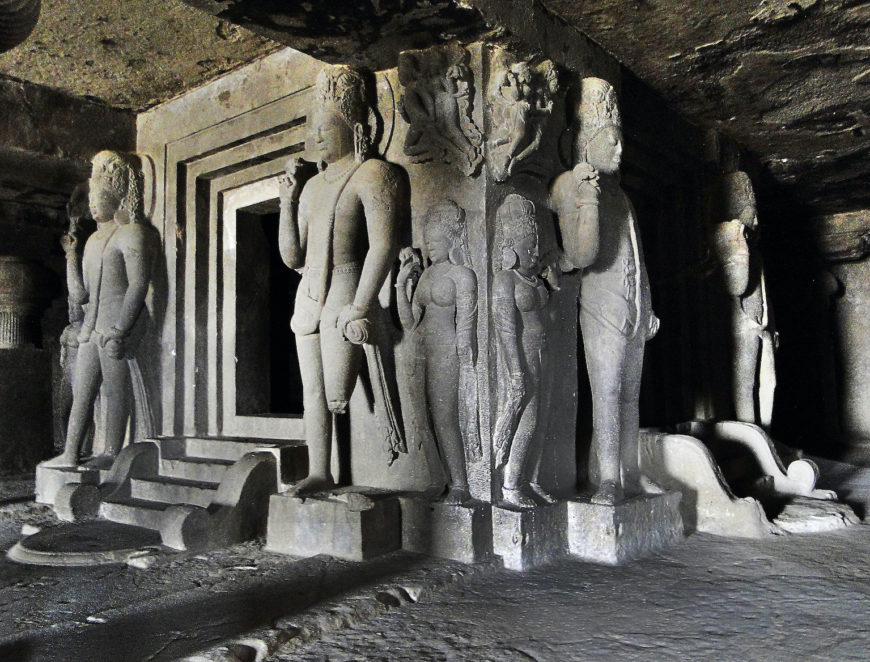
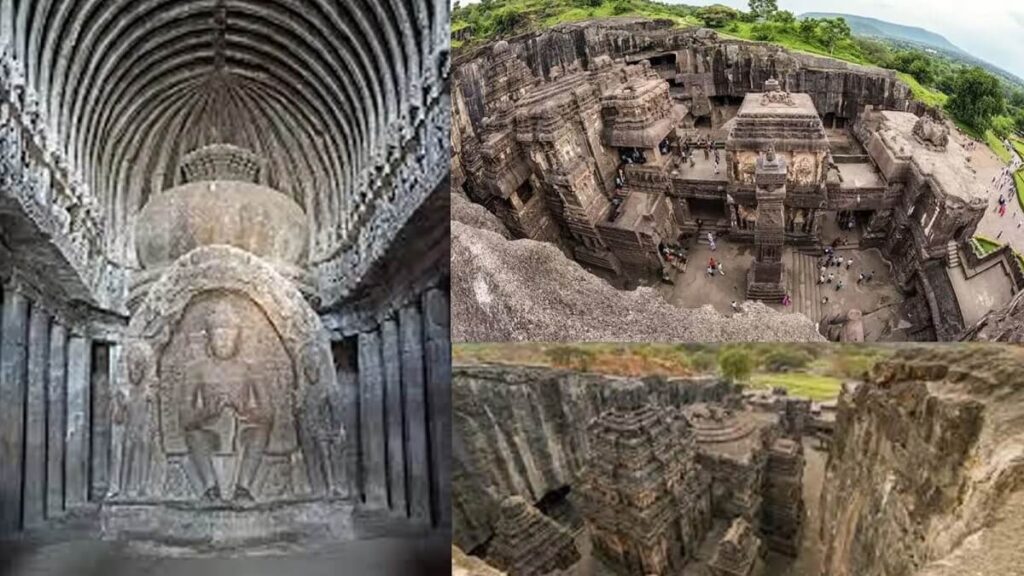
The complex consists of 34 caves, 12 Buddhist, 17 Hindu, and 5 Jain. Each one showcases advanced craftsmanship and serves as a reflection of the rich spiritual traditions that flourished side by side. The Kailasa Temple (Cave 16) is the most iconic monument, carved entirely from a single rock. It is considered one of the largest monolithic structures in the world, symbolizing Mount Kailash, the abode of Lord Shiva.
A tour here allows visitors not only to see religious artistry but also to understand how faith and architecture evolved over centuries in India.
Key Highlights to See on an Ellora Caves Tour
Kailasa Temple (Cave 16)
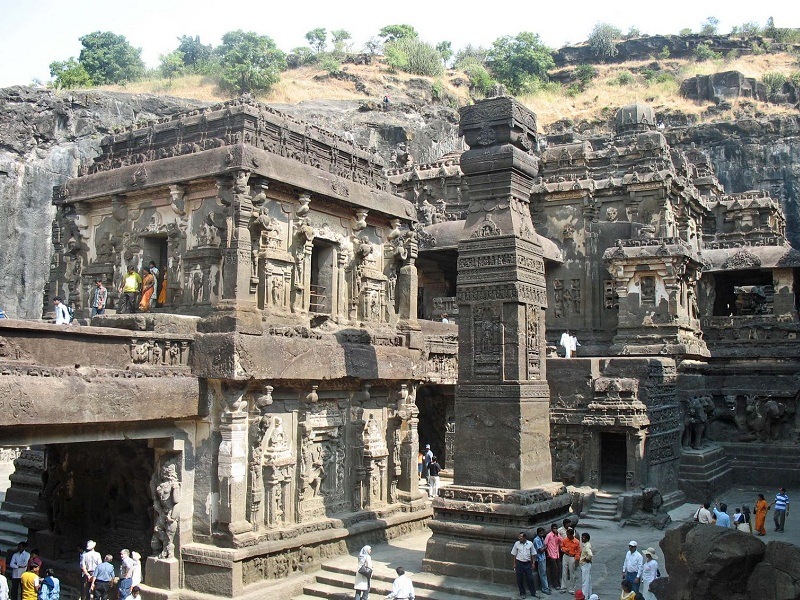
The Kailasa Temple is often the highlight of any Ellora Caves tour. It is a monumental Hindu temple dedicated to Lord Shiva and was carved from top to bottom, a remarkable feat considering the precision and scale. The temple complex includes intricately sculpted pillars, elephants, lions, and mythological scenes from the Ramayana and Mahabharata.
Tourists are often stunned by the sheer size and detail of the carvings, which make it appear as if an entire palace has been lifted out of the rock. The Kailasa Temple is not only a masterpiece of Indian architecture but also an enduring symbol of devotion.
Buddhist Caves
The Buddhist caves, numbered 1 to 12, are among the earliest creations at Ellora. They include monasteries, prayer halls, and large seated Buddha figures carved into stone. One of the most impressive is Cave 10, known as the Vishvakarma Cave or “Carpenter’s Cave.” It features a massive seated Buddha under a stupa, giving visitors a glimpse of ancient Buddhist meditation practices.
These caves offer a serene atmosphere compared to the grandeur of the Hindu caves, making them an essential stop for those seeking to understand India’s Buddhist traditions.
Jain Caves

The Jain caves, though fewer in number, are equally impressive. Built between the 9th and 10th centuries, these caves are known for their delicate detailing and focus on ascetic themes. Cave 32, the Indra Sabha, features stunning pillars, statues of Tirthankaras, and beautifully carved ceilings.
A visit to these caves highlights the Jain philosophy of simplicity, spirituality, and intricate artistry.
Benefits of Choosing an Ellora Caves Tour with Modern Technology
Modern tourism has transformed how travelers experience heritage sites like Ellora Caves. Guided tours integrated with technology provide several benefits for both casual travelers and history enthusiasts.
First, audio guides and mobile apps offer multilingual explanations that bring the caves to life, engagingly narrating their stories. Virtual reality (VR) reconstructions allow visitors to visualize how the caves might have appeared during their prime. GPS-based navigation systems within the complex also ensure that tourists don’t miss any important spots.
These technological enhancements not only make the Ellora Caves more accessible but also allow visitors to immerse themselves in history in a way that traditional tours cannot match.
Real-World Examples of Ellora Caves Tour Experiences
Guided Audio Tours
Many travelers now choose guided audio tours, where a handheld device or mobile app provides historical context as you walk through the caves. For example, while standing inside the Kailasa Temple, the audio guide narrates how thousands of workers spent decades chiseling the structure. This enhances appreciation of the artistry and scale.
Virtual Reality Reconstructions
Museums and cultural organizations have introduced VR experiences for the Ellora Caves. With VR, tourists can see color reconstructions of faded frescoes or walk virtually into areas restricted for preservation. This is particularly valuable for students, researchers, and history lovers who want to study the caves in detail.
Drone Photography Tours
Some travel agencies offer drone-assisted photography packages. Drones capture panoramic views of the site that aren’t visible from the ground. This provides travelers with unique keepsakes while also documenting the grandeur of the caves in new perspectives.
Educational School Trips
Schools often arrange Ellora Caves tours to teach students about Indian history, art, and culture. These trips combine classroom learning with real-world exploration, helping children understand the value of heritage preservation.
Practical Use Cases and Advantages of Visiting Ellora Caves
An Ellora Caves tour serves multiple purposes beyond sightseeing.
For history enthusiasts, it offers direct access to ancient architectural marvels that textbooks can only describe. For spiritual travelers, the caves represent a sacred journey into India’s religious traditions. Artists and architects gain inspiration from the carvings, learning how ancient builders achieved such precision without modern tools.
The tour is also beneficial for students and researchers. It provides a living laboratory to study cultural syncretism, architecture, and the evolution of Indian art. Families find value in the tour as well, as it offers a wholesome educational and recreational experience.
Travel Tips for Your Ellora Caves Tour
- The best time to visit is between November and March when the weather is pleasant.
- Start your tour early in the morning to avoid large crowds.
- Carry water and wear comfortable shoes as the complex is spread out.
- Hiring a local guide can provide deeper insights into the stories behind the carvings.
- Photography is allowed, but drones may require special permission.
Frequently Asked Questions
1. How much time is needed to explore Ellora Caves?
On average, visitors should plan for at least 4–5 hours to explore the major highlights, though history enthusiasts may spend a full day appreciating the details.
2. Are the Ellora Caves accessible for children and elderly visitors?
Yes, though some caves require climbing steps. Comfortable walking shoes and occasional rest breaks are recommended for elderly travelers.
3. What makes Ellora Caves different from Ajanta Caves?
While Ajanta Caves are primarily Buddhist and known for their paintings, Ellora features a unique mix of Hindu, Buddhist, and Jain caves, making it more diverse in cultural representation.