Corporate Travel Expense Management: Complete Guide for Businesses
Corporate travel is one of the largest controllable expenses for many organizations, but without proper systems in place, it can easily spiral out of control. Corporate travel expense management refers to the processes, policies, and technologies that companies use to plan, track, and optimize their travel spending.
It covers everything from booking flights and hotels to handling reimbursements, auditing expenses, and ensuring compliance with corporate policies. In today’s fast-moving business world, companies can no longer rely solely on manual processes like paper receipts or spreadsheet tracking. Instead, they are increasingly turning to specialized tools and digital solutions that streamline the entire travel expense lifecycle.
Effective corporate travel expense management is not just about cost savings; it also ensures compliance, reduces fraud, and creates a smoother experience for employees who frequently travel for work.
Why Corporate Travel Expense Management Matters
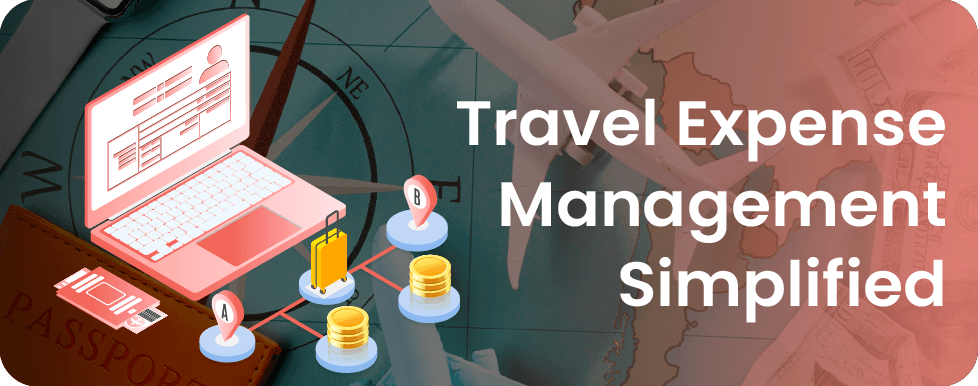
Businesses often underestimate how much unmanaged travel expenses impact their bottom line. Poor visibility, delayed approvals, and a lack of control can lead to overspending and compliance risks. For instance, without automated processes, finance teams might spend countless hours manually reconciling receipts and expense reports.
By adopting structured expense management strategies, companies gain clearer visibility into spending patterns. They can negotiate better deals with travel vendors, improve policy adherence, and create a more seamless process for employees submitting claims. Additionally, well-managed travel programs can reduce fraud risks and ensure compliance with both internal policies and government regulations.
Key Components of Corporate Travel Expense Management
Policy Creation and Enforcement
The foundation of expense management is a well-defined corporate travel policy. This includes guidelines for flight bookings, accommodation standards, per diems, and rules for reimbursable vs. non-reimbursable expenses. By clearly outlining expectations, businesses can prevent misunderstandings and promote consistency.
Expense Tracking and Reporting
Modern systems allow employees to upload receipts via mobile apps, track spending in real time, and submit digital reports. This improves transparency and reduces paperwork for both travelers and finance teams. Automated reporting tools also make it easier to analyze data, spot irregularities, and plan budgets effectively.
Compliance and Fraud Prevention
Another critical component is compliance management. Automated platforms can flag policy violations such as overspending on hotels or submitting duplicate receipts. This helps reduce fraud and ensures all expenses align with both corporate and regulatory requirements.
Benefits of Using Technology in Corporate Travel Expense Management
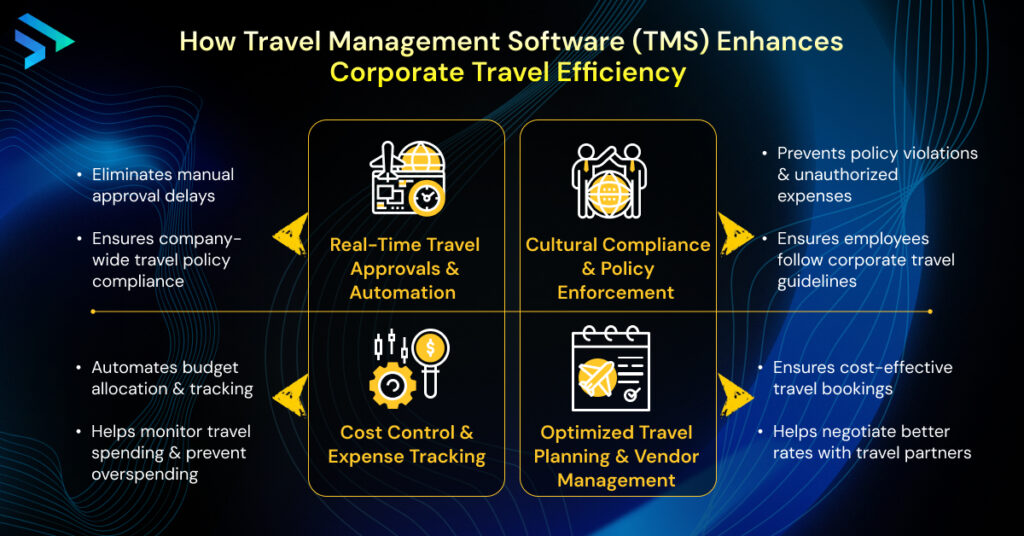
Digital transformation has revolutionized the way companies manage travel expenses. Instead of relying on manual entry and paper records, businesses now leverage cloud-based solutions, AI-powered tools, and mobile applications.
The benefits include:
- Time Savings: Automated expense submission and approval workflows significantly reduce administrative burdens.
- Cost Control: Real-time insights into spending allow managers to enforce budgets and identify cost-saving opportunities.
- Employee Satisfaction: Simplified processes make travel more enjoyable for employees, as they spend less time dealing with expense reports.
- Data Accuracy: Automation minimizes errors caused by manual data entry.
- Global Scalability: Cloud-based platforms support multinational teams, ensuring consistency across borders.
These benefits collectively empower businesses to maintain financial discipline while supporting employee productivity.
Real-World Examples of Corporate Travel Expense Management Tools
Concur Expense
Concur Expense, part of SAP Concur, is one of the most widely used corporate travel expense management tools. It allows employees to capture receipts using a mobile app, integrates with travel booking systems, and provides real-time expense reporting. Its automation capabilities reduce errors and ensure expenses comply with company policies.
Businesses using Concur Expense often highlight its ability to integrate seamlessly with accounting and ERP systems, making reconciliation faster and more accurate. It also provides analytics that help companies negotiate better vendor deals.
Expensify

Expensify is another popular tool that simplifies expense management for companies of all sizes. Employees can scan receipts with their smartphones, and the app automatically extracts the details. It also supports corporate card integrations, policy enforcement, and automated reimbursement.
Expensify is particularly known for its user-friendly interface, making it a favorite among startups and mid-sized businesses. Its scalability ensures that companies can continue using it as they grow, without significant disruptions.
Zoho Expense
Zoho Expense is a cloud-based expense management platform that offers advanced automation features. It allows businesses to set multi-level approval workflows, track expenses in real time, and generate detailed compliance reports.
Companies using Zoho Expense often emphasize its cost-effectiveness and seamless integration with other Zoho applications like Zoho CRM and Zoho Books. This makes it an attractive option for businesses looking for an all-in-one solution.
Certify Expense

Certify Expense helps streamline corporate travel expense reporting with features like receipt capture, mileage tracking, and automated approvals. Its analytics dashboard provides actionable insights into travel spending patterns, enabling companies to make data-driven decisions.
Businesses using Certify often appreciate its intuitive interface and ability to handle complex corporate travel policies, making it a solid choice for larger organizations.
Use Cases of Corporate Travel Expense Management
Reducing Administrative Burden
Without automation, employees spend significant time collecting receipts, filling out reports, and waiting for approvals. Expense management systems streamline these tasks, freeing employees to focus on productive work.
Controlling Costs
Real-time visibility into spending allows companies to identify areas of overspending. For example, analytics may reveal that employees consistently book higher-class flights than permitted. This insight allows managers to enforce policies and negotiate better travel deals.
Enhancing Compliance
Organizations must adhere to government regulations and internal rules. Automated systems help ensure expenses are documented correctly, reducing risks during audits.
Improving Employee Experience
Travel can already be stressful; adding cumbersome reporting processes only makes it worse. Streamlined expense reporting creates a more positive experience, increasing employee satisfaction and retention.
FAQs on Corporate Travel Expense Management
1. What is corporate travel expense management?
Corporate travel expense management is the process of tracking, controlling, and optimizing business travel costs using policies, workflows, and digital tools to ensure compliance and efficiency.
2. How does technology improve expense management?
Technology automates manual tasks such as receipt collection, expense reporting, and approvals. It improves accuracy, reduces fraud, and gives companies real-time insights into spending patterns.
3. What challenges can expense management solve?
It helps businesses reduce overspending, improve compliance, prevent fraud, and streamline the employee experience by eliminating paper-based processes.